Whether you're dealing with a leak, planning a roof replacement, or just curious about what you're paying for, this guide breaks down every part of a roof in plain English.
The Four Main Categories of Roof Parts
Your roof is a carefully designed system where every part plays a specific role. Think of it like your body. You've got bones for structure, a circulatory system for moving things around, lungs for breathing, and skin for protection. Each part of your roof works the same way.
Structural Elements
Think of these as the bones of your roof, or the framework that everything else attaches to. Structural elements provide the slope, shape, and stability that allow your roof to stand up against wind, snow, rain, and time.
The main structural components include rafters or trusses (the angled beams that create your roof's shape), roof decking or sheathing (the solid layer that everything attaches to), and sometimes collar beams (extra reinforcement in areas with severe weather).
Why it matters: Without a solid structure, nothing else matters. It's the foundation that supports every other system.
Drainage Components
If structure is the skeleton, drainage is the circulatory system. These components are all about moving water away from your home as quickly and efficiently as possible.
Drainage includes everything from the underlayment (a waterproof barrier under your shingles) to flashing (metal pieces that seal gaps), gutters (the channels that collect water), and drip edges (the strips that direct water into gutters). Some roofs also have ice and water shields in problem areas where leaks are most likely.
Why it matters: Most roof problems stem from drainage failures. A missing piece of flashing or clogged gutter can lead to water infiltration that damages not just your roof, but your walls, insulation, and foundation.
Ventilation
Ventilation might be the most underestimated part of your roof. These small vents allow air to flow through your attic, pushing out hot, humid air and bringing in fresh, cool air.
Ventilation can be active (using fans to move air) or passive (relying on natural airflow). Either way, the goal is the same: prevent moisture buildup, reduce heat in summer, and extend the life of your roof and attic insulation.
Why it matters: Poor ventilation causes all sorts of problems you might not connect to your roof. In summer, trapped heat can make your AC work overtime and shorten shingle life. In winter, trapped moisture leads to mold, rot, and ice dams.
Exterior Components
These are the parts you actually see. This is the outer layer that takes the beating from sun, rain, wind, hail, and everything else nature throws at it. Exterior components are your first line of defense and often the first parts that need repair or replacement.
This category includes your roof covering (shingles, metal panels, tiles, etc.), ridge caps (the protective cap at the peak), soffits and fascia (the finished edges under your roof overhang), and decorative or functional additions like skylights or dormers.
Why it matters: Exterior components are what most people think of when they think "roof," and they're usually what needs replacing every 15-30 years depending on material.
How These Categories Work Together
Here's the key thing to understand: all four categories depend on each other. You can have the best shingles money can buy, but if your drainage is bad, water will find its way in. You can have perfect ventilation, but if your structural elements are failing, it won't matter.
The performance of each part affects the integrity of the other three. That's why roof inspections look at the whole system, not just the shingles. And it's why cheap repairs that ignore underlying issues usually lead to bigger problems down the road.
When roofers talk about "roof health," they're really talking about how well all four of these systems are working together. A healthy roof has solid structure, effective drainage, proper ventilation, and intact exterior components. Miss any one of these, and you've got problems (either now or in the near future.)
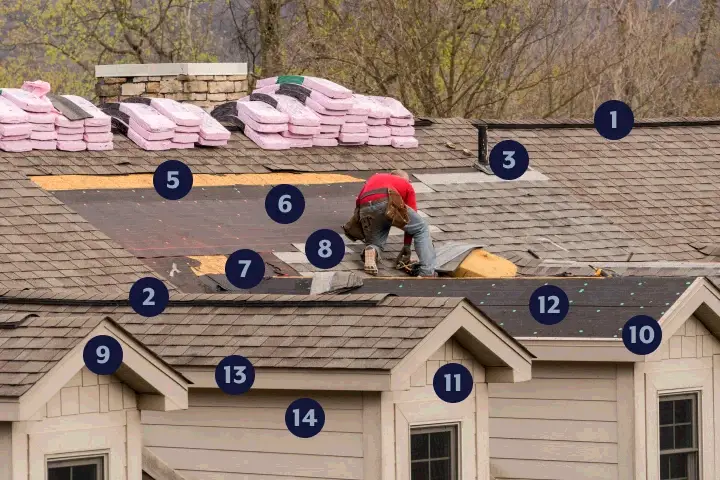
Complete Diagram Showing the Different Parts of a Roof
Now let's get a little more specific. Above, you'll see a diagram showing each part of your roof. Let's talk through what it looks like, where you'll find it, and what job it's doing to keep your home dry and protected.
Roof Ridge
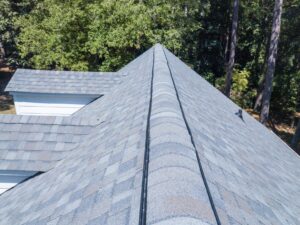
The roof ridge is the highest point on your roof. You might also hear it called the peak. This is one of the most critical areas of your roof because it's constantly exposed to the elements from all sides. Because the ridge takes so much abuse from wind, rain, and sun, it needs special protection. That's why hip and ridge shingles are specifically designed for this area. These shingles are thicker and more flexible than regular shingles, allowing them to bend over the peak and seal properly on both sides.
Ridge Vent
A ridge vent runs along the entire peak of your roof, and it's one of the smartest pieces of roof design out there. This exhaust vent allows warm, humid air to escape from your attic naturally. No electricity, no moving parts, just physics doing its thing. Hot air rises. In your attic, that hot, humid air needs somewhere to go, or it'll just sit there cooking your shingles from below and creating moisture problems. The ridge vent gives it an escape route. When paired with intake vents at your eaves, you create a natural airflow that keeps your attic temperature and moisture levels in check.
Flashing
Flashing is thin, bendable metal (usually aluminum or galvanized steel) installed anywhere your roof meets something else; around chimneys, along walls, near skylights, or around vent pipes. Basically, anywhere there's a seam or opening, you need flashing. Think of flashing as caulk on steroids. While shingles handle the flat parts of your roof, flashing seals the tricky spots where water loves to sneak in. Without proper flashing, these vulnerable spots would leak within months. With it, they stay watertight for decades. When roofers talk about the most common source of leaks, it's almost always failed or improperly installed flashing.
Hip
A hip is where two roof planes meet at an angle, creating a sloping ridge that runs from the peak down to the eave (the bottom edge). If you have a roof that slopes on all four sides instead of just two, you've got hips. Just like the main ridge at the top of your roof, hips are high-stress areas that need extra protection. That's why the same hip and ridge shingles used on the peak are also used here. These specially designed shingles seal the joint properly and hold up better against the wind that tends to hit these exposed angles.
Roof Deck
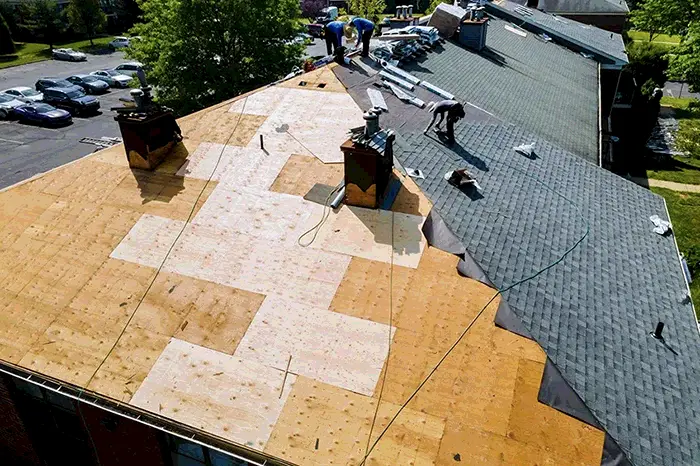
The roof deck, also called sheathing, is the foundation that everything else sits on. It's typically made from plywood or oriented strand board (OSB), and it covers your entire roof, creating a solid surface for shingles and underlayment to attach to. You can't see the roof deck once your roof is finished, but it's arguably the most important part. If your deck is damaged, rotted, or improperly installed, nothing you put on top of it will perform right. During roof replacements, contractors often find sections of deck that need replacing due to water damage or age (this is completely normal and actually a sign of a thorough job.)
Roofing Underlayment
Roofing underlayment is your roof's second line of defense, a waterproof or water-resistant layer that goes on top of the deck but underneath the shingles. Think of it as insurance. If wind lifts a shingle or water works its way under them, the underlayment is there to keep moisture from reaching the deck. Traditionally, underlayment was made from felt paper (tar paper). These days, synthetic underlayment is taking over because it's stronger, more waterproof, lasts longer, and doesn't tear as easily during installation. It's one of those upgrades that's absolutely worth the extra cost.
Roof Valley
A roof valley is exactly what it sounds like. It's a V-shaped channel where two roof slopes meet at an angle. While ridges are peaks, valleys are the opposite: the low points where water naturally flows. Valleys handle a lot of water volume since they're collecting runoff from two roof planes at once. That's why they need special attention during installation, with extra underlayment and careful shingle or metal valley installation. A leaking valley can dump water into your attic or walls, making it one of the most critical areas to get right.
Laminated Architectural Shingles
These are the shingles you probably picture when you think "roof." Laminated architectural asphalt shingles are the most popular roofing material in America, and for good reason, they're affordable, durable, and come in tons of colors and styles. What makes architectural shingles "architectural" is their multi-layer design. Unlike old-school three-tab shingles that lie flat, architectural shingles have multiple layers of material bonded together, creating dimension and texture that looks more like natural slate or wood shake. They're also thicker and heavier, which means they last longer—typically 25 to 30 years or more.
Roof Gable (Rake)
A gable is the triangular section of wall you see at the end of a peaked roof. It's the area between the sloping roof edge and the eave below, and it's often a defining feature of a home's architectural style. Some people call the sloped edge of the roof along a gable the "rake." Gable edges need proper sealing and protection because they're exposed to wind-driven rain and can be vulnerable to wind uplift. Proper edge flashing and careful shingle installation along rakes help prevent water intrusion and wind damage.
Metal Drip Edge
Drip edge is a narrow strip of metal (usually aluminum) installed along the edges of your roof, both at the eaves (bottom) and along the rakes (sides). It might seem like a small detail, but it does two important jobs. First, it directs water away from the fascia board and into the gutter, preventing water from wrapping back under the shingles or dripping down your siding. Second, it gives your roof edge a clean, finished look while protecting the vulnerable edge of your deck from moisture and pest infiltration. Many building codes now require drip edge, and for good reason. It's cheap insurance against water damage.
Dormer
A dormer is a raised section that projects out from the main roof slope, usually containing a window. Dormers add light, space, and often charm to upstairs rooms or attic conversions. From a roofing perspective, dormers create complexity. They introduce more seams, valleys, and flashing points, all potential spots for leaks if not done correctly. That said, properly built and flashed dormers are no more likely to leak than any other part of your roof. They just require extra attention to detail during installation.
Ice and Water Barrier
An ice and water barrier (sometimes called ice and water shield) is a heavy-duty, self-adhesive waterproofing membrane installed in vulnerable areas of your roof. Unlike regular underlayment, which is water-resistant, ice and water barrier is 100% waterproof. It's typically installed along eaves (especially in cold climates prone to ice dams), in valleys, around chimneys, and along any walls or transitions where water tends to accumulate. In regions with harsh winters, building codes often require ice and water barrier for the first three to six feet of the roof edge. This is one component where spending extra money pays off.
Eave
The eave is the lower edge of your roof where it meets or overhangs the wall, typically the first three feet or so. This is where most of your roof's drainage happens: water flows down from the peak, across the field of the roof, and off the eave into the gutters. Eaves also provide shade and weather protection for your exterior walls, keeping rain from splashing directly against siding and windows. The overhang length varies by architectural style and climate—homes in rainy regions often have deeper eaves for extra protection.
Undereave Vent
Undereave vents, installed along the underside of your roof overhang (the soffit), are the intake side of your roof's ventilation system. While ridge vents at the top let hot air out, soffit vents at the bottom let cool, fresh air in. This creates a natural convection loop: cool air enters through the soffit vents, travels up through the attic, pushes hot air toward the ridge, and exhausts it through the ridge vent.
Putting It All Together
Your roof is a system where every component plays a specific role. The deck provides structure. The underlayment provides backup protection. The shingles provide primary defense. Flashing seals the gaps. Ventilation keeps everything dry and temperate. Drainage moves water away before it can cause problems.
When one part of your roof fails (i.e. torn shingle, clogged vent, missing flashing) it doesn't just affect that one spot. It can trigger a cascade of problems throughout the system. That's why regular inspections matter and why cheap patch jobs often lead to bigger repairs down the road.
Now that you know what a healthy roof looks like, want to see how yours measures up? Hulsey Roofing offers free inspections that cover every roof part we've mentioned here.
Call (314) 846-7663 for a FREE Assessment