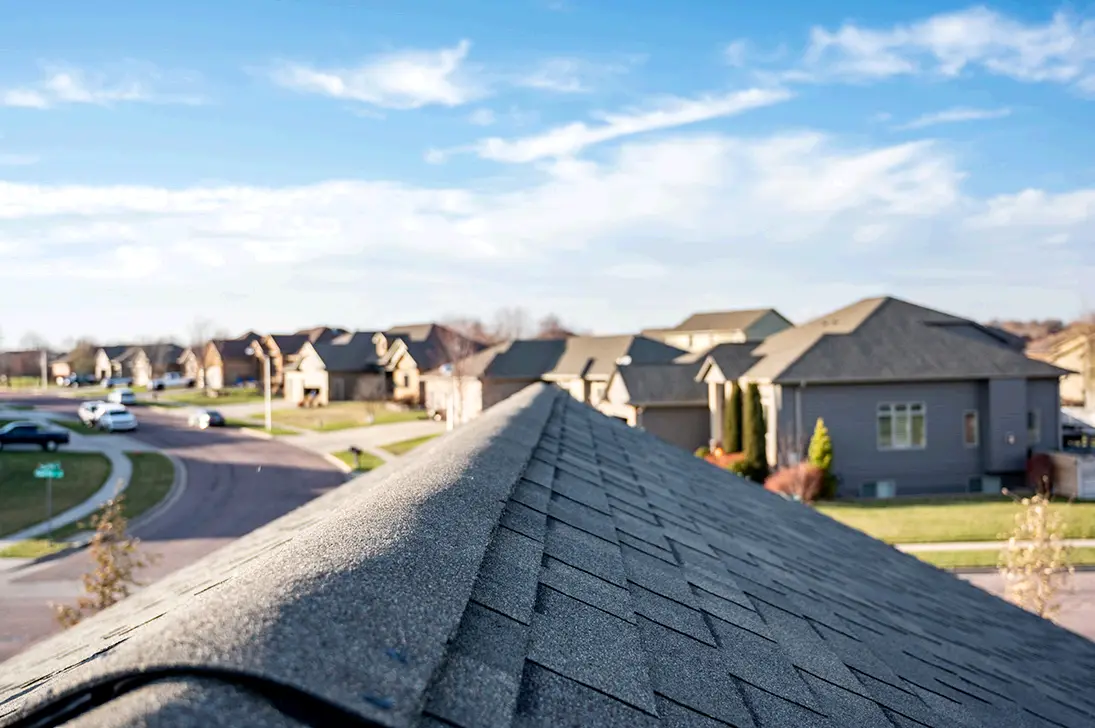
If you’re replacing your roof, the first big decision isn’t really which color or which brand. It’s which kind of asphalt shingle. And in nearly every case, the choice comes down to two options: traditional 3-tab shingles or architectural shingles (also called dimensional or laminate).
Most homeowners don’t realize they’re making this decision at all. The contractor quotes a price, the homeowner says yes, and only later, when the new roof is on the house, do they notice the difference between what they got and what their neighbor’s roof looks like. That’s a shame, because the architectural-vs-3-tab choice has bigger downstream consequences than almost any other roofing decision: how long the roof lasts, how it handles a major storm, what it does to your home’s resale value, and what your homeowners insurance company has to say about it.
This guide walks through both shingle types in detail. We’ll cover how they’re built, how they perform, what they cost, and how to figure out which one actually fits your home. By the end you’ll know which choice makes sense for your situation and why.
The Quick Answer
For most homeowners replacing a primary residence roof in 2026, architectural shingles are the right call. They last 25 to 30 years or more (versus 15 to 20 for 3-tab), they handle wind and impact dramatically better, and the upfront cost difference is typically recovered through longer lifespan and stronger resale value alone.
There are still scenarios where 3-tab shingles make sense. Rental properties, secondary structures, tight budgets, and matching an existing roof are all legitimate reasons to consider 3-tab, and we’ll cover them in detail. But the default has shifted, and for good reason. Architectural shingles now make up more than 90% of new asphalt shingle installations in North America.
Both Are Asphalt Shingles. Here’s What’s Actually Different
Before we get to the comparison, a quick note on terminology. Both 3-tab and architectural shingles are asphalt shingles. They’re made from the same core materials: a fiberglass mat soaked in asphalt, topped with mineral granules that handle weather exposure and color. The fundamental waterproofing technology is the same.
The difference is in the construction.
How 3-Tab Shingles Are Built
3-tab shingles are a single layer of asphalt material with three uniformly spaced cutouts along the bottom edge. Those cutouts (the “tabs”) give them their name. Once installed, they create a flat, repeating, shingle-by-shingle pattern that looks similar to slate or wood shake but in a simpler, more uniform way. They were the standard residential roofing shingle from roughly the 1960s through the 1990s.
How Architectural Shingles Are Built
Architectural shingles are built from two layers of asphalt material laminated together, with the upper layer cut into varied shapes that create depth, shadow, and a more random visual pattern. They’re sometimes called “dimensional” or “laminated” shingles for exactly this reason. The double-layer construction is what drives most of their performance advantages: more material, more weight, more durability, more visual depth.
The difference, once you know to look for it, is obvious from the curb. A 3-tab roof has a flat, uniform appearance. An architectural roof has texture, variation, and shadow lines that mimic premium roofing materials like cedar shake or slate at a fraction of the cost.
Side-by-Side Comparison
Here’s the core comparison at a glance. We’ll expand on each dimension below.
| 3-Tab | Architectural | |
| Construction | Single layer | Double layer (laminated) |
| Weight per square* | 200–240 lbs | 240–340 lbs |
| Typical lifespan | 15–20 years | 25–30+ years |
| Wind rating | Up to 60 mph (some 70 mph) | 110–130 mph (premium up to 150 mph) |
| Warranty | Typically 25 years | 30 years to lifetime |
| Cost installed | $1.50–$2.50 per sq ft | $3.00–$5.00 per sq ft |
| Appearance | Flat, uniform | Dimensional, textured |
| Color options | Limited | Extensive |
| Resale value impact | Neutral to slight negative | Neutral to positive |
*A “square” is a roofing industry term meaning 100 square feet of roofing*
Lifespan and Durability
The biggest practical difference between the two is how long they last.
Real-World Lifespan of 3-Tab Shingles
3-tab shingles typically last 15 to 20 years in normal conditions, and noticeably less in harsher climates. The single-layer construction means there’s simply less material between your home and the weather. The lighter weight makes them more vulnerable to wind uplift, impact damage, and granule loss over time. In areas where summer thunderstorms, hail, or significant freeze-thaw cycles all stress a roof, real-world 3-tab lifespan often comes in at the lower end of that range.
Real-World Lifespan of Architectural Shingles
Architectural shingles typically last 25 to 30 years or more, with premium designer-tier products warranted for 50 years or even lifetime. The double-layer construction puts roughly 25 to 40% more material on the roof, which translates directly into longer service life. They’re also more resistant to the slow degradation that shortens 3-tab life. Granule loss is slower, the laminated edges resist lifting, and the heavier weight keeps them seated through wind events that would loosen a 3-tab roof.
Why the Lifespan Math Matters
The math here matters more than people realize. If you’re in your forever home and the choice is between a 17-year roof and a 28-year roof, you may only re-roof once with the architectural option versus twice with 3-tab. That second tear-off (labor, disposal, materials, and the whole job) easily costs more than the upfront difference between the two shingle types.
Wind Resistance
If your home is anywhere that sees serious thunderstorms or tornado-related weather, wind resistance is not a theoretical concern.
How 3-Tab Performs in Wind
3-tab shingles are typically rated for winds up to 60 mph, with some manufacturers offering up to 70 mph with proper installation. That’s adequate for routine weather. But a serious thunderstorm with 70 mph or higher straight-line winds, which many parts of the country see several times per year, can lift and break 3-tab shingles in significant numbers. Once even a few shingles are gone, water gets under adjacent shingles and the damage cascades.
How Architectural Performs in Wind
Architectural shingles are typically rated 110 to 130 mph, with premium products going up to 150 mph. That’s strong enough to survive virtually any storm short of a direct tornado strike. The double-layer construction, the heavier weight, and the staggered installation pattern all contribute to wind performance that’s in a different league entirely.
For homeowners in storm-prone regions including the Midwest, Plains, Southeast, and Gulf Coast, this difference is one of the strongest practical arguments for architectural shingles. The cost of repairing or replacing wind-damaged 3-tab roofs after one major storm event can erase years of upfront savings.
Hail and Impact Resistance
Hail is a regional reality across much of the country. The Plains states, the Midwest, and the Front Range of the Rockies all sit in active hail corridors, and a single bad hailstorm can total a roof regardless of its age.
Standard Impact Performance
Standard architectural shingles handle hail meaningfully better than standard 3-tab. There’s more material, denser construction, and more resistance to puncture and granule loss. For homeowners in moderately hail-exposed areas, that step up alone often justifies the architectural premium.
Class 4 Impact-Resistant Shingles
For serious hail protection, both shingle types are available in impact-resistant ratings, classified by the UL 2218 testing standard from Class 1 (least resistant) to Class 4 (most resistant).
Class 4 shingles are tested to withstand a 2-inch steel ball dropped from 20 feet, meant to simulate baseball-sized hail. The higher standard typically translates into both better real-world hail performance and meaningful insurance premium discounts in hail-prone states.
We’ve covered the practical differences in detail in our Class 4 vs. Class 3 shingles guide, and we walk through whether the upgrade actually pencils out in our piece on whether impact-resistant shingles are worth it.
Should You Upgrade to Class 4?
If you’re choosing architectural over 3-tab anyway, the additional step to a Class 4 architectural shingle is a small percentage premium and often pays for itself through insurance savings within a few years. If you’re committed to 3-tab for budget reasons, an impact-resistant 3-tab option exists but is increasingly rare. Most insurance discounts are tied to Class 4 architectural products.
Appearance and Color Options
The aesthetic difference between 3-tab and architectural is the most visible distinction, and for most homeowners it’s a deciding factor.
How 3-Tab Looks
3-tab shingles create a flat, uniform appearance: straight horizontal lines and an identical pattern across the entire roof. From a distance they read as simple and clean. Up close they read as basic. Color options are limited; most 3-tab lines come in 6 to 10 standard colors, mostly grays, browns, and blacks.
How Architectural Looks
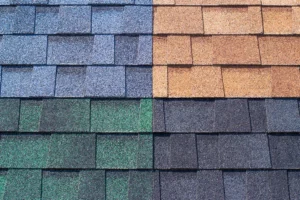
Architectural shingles have depth and visual texture. The varied tab shapes and double-layer construction create shadow lines that mimic premium materials like cedar shake, natural slate, or weathered wood. Color palettes are dramatically broader, with most architectural lines offering 20 to 40 or more color blends, including dimensional designer colors that aren’t available in 3-tab at all. If you want a roof that adds visual interest and curb appeal to your home, architectural delivers it. 3-tab generally doesn’t.
If you’re at the color-selection stage, our complete guide to roof shingle colors walks through the color families, pairing recommendations for your siding and brick, and a six-step framework for narrowing your options.
Cost: What You’ll Actually Pay
Cost is the main reason 3-tab still has a market, so it deserves a clear breakdown.
Typical Cost Ranges
For a typical 2,000 square foot home (roughly 22 to 25 squares of roofing once you account for waste and roof complexity), expect:
- 3-tab installed: roughly $5,000 to $10,000 total
- Architectural installed: roughly $9,000 to $16,000 total
- Premium or designer architectural: $14,000 to $25,000 or more
These ranges are wide because actual cost depends on roof complexity (steep pitches, multiple gables, valleys, and dormers all add labor), tear-off costs (one layer removal vs. two), underlayment and ice-and-water shield, ventilation upgrades, flashing replacement, and whether your contractor includes warranties, gutter cleanup, and disposal in the quote.
Why the Cost Gap Closes Over Time
The premium for architectural is real, typically 30 to 60% more than comparable 3-tab. But two factors often close the gap or eliminate it entirely.
Lifespan Economics
Spread over the life of the roof, architectural shingles often cost less per year than 3-tab. A $12,000 architectural roof at 28 years works out to about $429 per year. An $8,000 3-tab roof at 18 years works out to about $444 per year. And that’s before accounting for the higher likelihood of mid-life repairs on the 3-tab.
Resale Value
Most real estate agents will tell you a home with a 3-tab roof gets flagged as “older” or “basic” by buyers regardless of actual age, while architectural reads as standard or premium. The resale impact alone often justifies the upgrade for homeowners planning to sell within 10 years.
When 3-Tab Still Makes Sense
We’ve made a clear case for architectural. But 3-tab isn’t dead, and there are real scenarios where it’s still the right choice.
Rental Properties and Investment Homes
If you own a property where every dollar of capital expenditure has to pencil out against rental income, the lower upfront cost of 3-tab may be the right business decision. This is especially true if you don’t expect to hold the property for the full 25-year life of an architectural roof.
Secondary Structures
Detached garages, sheds, workshops, and outbuildings often don’t justify architectural pricing. A simple, functional roof that lasts 18 years on your storage shed is generally fine.
Tight Budgets Where the Alternative Is Delaying the Roof
If the choice is between 3-tab now or architectural later (with active leaks in the meantime), 3-tab now is the better answer. A new 3-tab roof beats a failing roof of any kind.
Matching an Existing Partial Roof
If you’re replacing only one section of an older home that has 3-tab elsewhere, matching the existing material may be a reasonable choice. That said, many homeowners use a partial replacement as the prompt to upgrade the whole roof to architectural instead.
Temporary Roofs
If you’re roofing a property you’ll demolish or significantly remodel within a few years, there’s no reason to put a 30-year roof on a house you’ll tear down in three.
For nearly every other scenario, including primary residences, long-term ownership, storm-prone climates, and homes you’ll eventually sell, architectural is the better answer.
Installation Differences
Both shingle types install with similar techniques: staggered courses, sealed seams, exposed nailing. But there are some practical differences worth knowing.
Architectural Installation
Architectural shingles are heavier and require slightly more labor per square. They’re also more forgiving of minor decking imperfections because their thicker construction hides small variations that would show through on a 3-tab roof. The visual layout of an architectural roof is more forgiving too. The random pattern means small alignment issues aren’t visible the way they would be on the rigid uniform pattern of 3-tab.
3-Tab Installation
3-tab installation is more demanding of clean alignment. Because every shingle creates a perfectly horizontal line, even small installation errors are visible from the curb for the life of the roof. This is one reason DIY 3-tab installations often look worse than DIY architectural installations, and one reason proper contractor selection matters regardless of which shingle you choose.
What Both Shingle Types Require
Both shingle types require proper underlayment, ice-and-water shield in vulnerable areas (eaves, valleys, and around penetrations), ventilation, and flashing. Cutting corners on any of those, regardless of shingle choice, shortens the life of the roof.
Warranty Comparison
Warranties for both shingle types have evolved, and the headline numbers can be misleading.
3-Tab Warranties
3-tab warranties typically run 25 years from major manufacturers like GAF, Owens Corning, and CertainTeed. The catch: that 25 years is prorated, often heavily, after the first 5 to 10 years. Real-world claim payouts on 15-year-old 3-tab failures often work out to a small fraction of replacement cost.
Architectural Warranties
Architectural warranties run 30 years to lifetime, with the strongest coverage on premium designer-tier products. Most architectural warranties also include better non-prorated periods, stronger material defect coverage, and (importantly) enhanced workmanship coverage when installed by manufacturer-certified contractors.
What Both Warranties Don’t Cover
Two warranty notes apply to both shingle types.
Wind Warranties Are Separate from Material Warranties
Both shingle types come with wind warranties that typically require specific installation methods, such as extra nails per shingle, proper starter strip, and specific underlayment, to qualify for the maximum wind coverage. Skipping these steps voids the wind warranty entirely.
Manufacturer Warranties Don’t Cover Everything
Improper installation, failure to follow manufacturer instructions, lack of proper ventilation, and storm damage are all common warranty exclusions. The strongest coverage typically comes from system warranties offered when an entire manufacturer-approved roofing system is installed by a certified contractor. These are available almost exclusively with architectural shingles.
Common Myths
Some misconceptions show up regularly when homeowners are weighing this choice. Worth clearing up.
“3-Tab Is Basically the Same Shingle, Just Cheaper”
Not really. The construction is fundamentally different (single-layer versus double-layer), and that drives meaningful differences in lifespan, wind resistance, and durability.
“Architectural Shingles Are Just for Looks”
The aesthetic upgrade is real, but the performance differences are larger than the visual ones. The double-layer construction is the main story.
“My Contractor Said 3-Tab Is Fine”
Some contractors still recommend 3-tab by default, particularly on lower-budget jobs. That’s not necessarily wrong, but make sure you understand the trade-off you’re making. Not just the cost difference, but the lifespan and storm-performance differences too.
“Architectural Shingles Are Too Heavy for My House”
Modern residential framing handles architectural shingle weight without issue. The only situations where this becomes a real concern are very old homes with original framing and questionable structural condition, or homes already loaded with multiple existing shingle layers.
“3-Tab Will Save Me Money”
Maybe in the short term. Almost never over the actual life of the roof.
Frequently Asked Questions
How can I tell what kind of shingles I have now?
Look at your roof from the curb. If it has a flat, uniform appearance with straight horizontal lines and identical-looking shingles in repeating rows, it’s 3-tab. If it has visual texture, varied shapes, and shadow depth, it’s architectural.
Can I install architectural shingles over an existing 3-tab roof?
In some cases yes, if local code allows a second layer and your existing roof and decking are sound. However, most professional roofers strongly recommend tear-off rather than overlay. Overlay adds significant weight, voids most manufacturer warranties, and traps any underlying problems. Tear-off is almost always the right call.
Do architectural shingles last twice as long as 3-tab?
Not quite, but close. Architectural typically delivers 50 to 70% more service life than 3-tab in real-world conditions: 25 to 30 years versus 15 to 20.
Will architectural shingles lower my homeowners insurance?
Standard architectural usually doesn’t change your premium meaningfully. Class 4 impact-resistant architectural shingles, however, often qualify for significant insurance discounts in hail-prone states. Ask your insurer specifically about Class 4 impact-resistant credits.
Can I mix 3-tab and architectural on the same house?
Technically yes, but it almost always looks bad and isn’t worth the savings. If you’re replacing a portion of a roof, match what’s there or replace the whole thing.
What’s the most popular architectural shingle?
GAF Timberline HDZ is the best-selling architectural shingle in North America by a significant margin. CertainTeed Landmark and Owens Corning Duration are the other most common choices. All three are quality products from major manufacturers. The choice between them often comes down to color preference, your contractor’s certifications, and warranty structure.
Are 3-tab shingles being phased out?
They’re declining steadily. Architectural now represents over 90% of new asphalt installations. But 3-tab shingles are still manufactured by all major brands and aren’t going away in the immediate future. Expect them to remain available primarily as a budget option for the foreseeable future.
Which is better for a steep-pitch roof?
Architectural is better for almost any pitch. On steep roofs the visual difference becomes even more pronounced because more of the roof is visible from the ground.
The Bottom Line
For the vast majority of homeowners replacing a primary residence roof, architectural shingles are the right answer. They last longer, handle severe weather dramatically better, look better, and the cost premium is typically recovered through longer lifespan and stronger resale value.
3-tab still has its place. Rental properties, outbuildings, and tight budgets where the alternative is delaying the roof are all legitimate cases. But the default choice has shifted, and for good reasons that go beyond aesthetics.
If you’re weighing this decision for your home, the next step is a real conversation about your specific roof: its current condition, your timeline, your budget, your storm-protection priorities, and whether the upgrade to a Class 4 impact-resistant architectural product makes sense for your situation. Hulsey Roofing has been helping homeowners navigate this decision for years, bringing real shingle samples to your home, giving you straight answers about what each option will and won’t do, and providing detailed quotes that lay out the trade-offs clearly. Reach out anytime. The right roof is the one that matches your home, your climate, and your timeline, and it’s worth taking the time to choose it carefully.