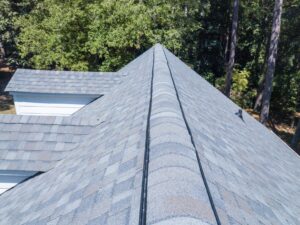

The most common types of roofing materials are asphalt shingles, metal roofing, natural and synthetic slate, clay and concrete tiles, wood shakes, and flat-roof membranes like TPO and EPDM. Each one balances upfront cost, lifespan, durability, and maintenance differently, so the right roofing material handles your local climate. In this guide, we compare every option side by side so you can make an informed decision before your next roof replacement.
Asphalt Shingles: The Most Common Roofing Material
3-Tab vs. Architectural Shingles
- 3-tab shingles are a single, flat layer with a uniform look. According to the International Association of Certified Home Inspectors (InterNACHI), they carry the lowest upfront cost and typically last about 20 years.
- Architectural (dimensional) shingles are built from laminated layers that add depth, texture, and curb appeal. They're heavier, hold up better to wind uplift, and have an estimated lifespan of around 30 years.
Today, most homeowners choose architectural shingles. The price difference over 3-tab is modest, and the extra decade of service usually makes up for it.
Impact-Resistant Shingles for Hail-Prone Areas
Missouri sees its share of spring and summer hail, which is why impact-resistant shingles have become a smart upgrade here. These products are tested under the UL 2218 standard, and a Class 4 rating, the highest available, means the shingle withstood a 2-inch steel ball dropped from 20 feet without cracking. Many insurance carriers offer premium discounts for a Class 4 impact-resistant roof, so it's worth calling your agent before you choose a product.
At Hulsey, we're CertainTeed credentialed contractors, including ShingleMaster™ credentials, which give our customers access to enhanced manufacturer warranties like SureStart™ PLUS protection that aren't available through non-credentialed roofers. When you're ready for an asphalt shingle roof installation, that credential means your new roof is backed by both the manufacturer and our own workmanship guarantee.
Metal Roofing: Built for Durability and Energy Efficiency
Metal roofing has moved well beyond barns and outbuildings. Modern metal roofing materials come in a range of profiles and colors, and they've become a premium option for homeowners seeking a roof they may never have to replace again.
Types of Metal Roofs
- Standing seam metal roofs use long vertical panels joined by raised, interlocking seams. Fasteners are hidden beneath the panels, so there are fewer places for water to get in. This is the most popular style for homes.
- Exposed-fastener metal panels (ribbed or corrugated) are screwed directly through the panel. They cost less but need fastener checks over time, so you'll see them more often on garages, sheds, and commercial buildings.
- Metal shingles are stamped steel or aluminum shaped to look like asphalt shingles, slate, or wood shakes, combining a traditional look with metal's durability.
Most residential metal roofs are made of coated steel or aluminum. Specialty metals like copper and zinc sit at the top of the price range. Copper develops a distinctive green patina and can last 70 years or more.
Why Homeowners Choose Metal
- Long lifespan: InterNACHI estimates metal roofs last 40 to 80 years, two or three times longer than asphalt.
- Wind and hail resistance: Interlocking panels resist wind uplift during severe thunderstorms, and heavier-gauge panels withstand hail better. Large hailstones can still cause cosmetic dents, so ask about impact-rated products.
- Fire resistance: Metal is noncombustible, adding peace of mind against wind-blown embers.
- Energy efficiency: Reflective "cool roof" coatings bounce sunlight away instead of absorbing it. According to the U.S. Environmental Protection Agency, cool roofs can stay up to 60°F cooler than traditional dark roofs in summer, which can lower energy bills during humid Missouri heat waves.
- Minimal maintenance: Metal sheds snow and debris easily and doesn't rot, curl, or lose granules.
Common Concerns About Metal Roofing
Upfront cost. Metal costs significantly more to install than asphalt shingles. Because it can last decades longer, though, the cost per year of service often evens out.
Noise. The "tin roof in a rainstorm" reputation comes from metal laid over open framing. On a home, metal is installed over solid decking and underlayment, with attic insulation below, so rain sounds much like it does on any other roof.
Installation skill. Metal expands and contracts with temperature swings. Panels, fasteners, and flashing must be installed correctly to allow for that movement, so experience matters.
Slate and Designer Shingles: Premium Roofing Materials for Historic Homes
St. Louis is home to some of the most beautiful older housing stock in the Midwest. From Lafayette Square and Soulard to the brick neighborhoods of South City and the inner-ring suburbs, many of these homes were originally topped with natural slate, and some of those roofs are still protecting families today. If you own an older home, or simply want unmatched curb appeal, these premium options deserve a look.
Natural Slate
Natural slate is quarried stone split into individual tiles. It's one of the most durable roofing materials ever used. InterNACHI estimates a lifespan of 60 to 150 years, and slate is naturally fire-resistant with very low water absorption. The trade-offs are cost and weight. Slate is among the heaviest roofing materials available, so your contractor needs to confirm your home's structure can carry the load; some homes need structural reinforcement first.
Installation and repair are specialized work. Slate tiles crack if walked on incorrectly, they're attached with copper or stainless steel nails, and matching replacement slate to a century-old roof takes a trained eye. Hire a contractor with real slate experience, not just shingle crews.
Synthetic Slate
Synthetic slate is made from engineered polymers, rubber, or recycled plastics molded to replicate the look of stone. It's far lighter, so it rarely needs extra structural support, and it costs a fraction of natural slate. Many synthetic materials also carry impact ratings suited to hail-prone areas. The downside is a shorter service life. InterNACHI lists simulated slate at 10 to 35 years, depending on the product.
Designer Shingles
Designer (luxury) shingles are heavyweight, multi-layer asphalt shingles cut to mimic the shadow lines of slate or hand-split wood shakes. CertainTeed's luxury lines, for example, deliver a high-end look at a much lower cost and weight than stone. They're a popular way to preserve the character of a historic home while sticking to a practical budget. Whatever you choose, our team specializes in roofing for historic and modern homes across the St. Louis area.
TPO vs. EPDM Roofing: Comparing Flat Roof Materials
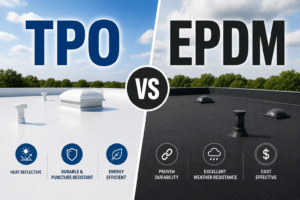
Flat and low-slope roofs can't use shingles because water drains too slowly and would work its way under the overlaps. Instead, they need a continuous waterproof membrane. You'll find these systems on most commercial buildings and many residential porches, garages, additions, and modern-style homes. The two most common flat roof materials are TPO and EPDM.
TPO (Thermoplastic Polyolefin)
TPO is a single-ply membrane, usually white, that reflects sunlight to help keep buildings cooler. Its seams are heat-welded with hot air, fusing neighboring sheets into one continuous surface. TPO has been in use since the 1990s, and its formulations have improved over time.
EPDM (Ethylene Propylene Diene Monomer)
EPDM is a synthetic rubber membrane, typically black, that has protected flat roofs since the 1960s. That long track record is one of its biggest selling points. EPDM stays flexible in cold weather, resists hail well, and is easy to patch. Its seams are joined with adhesives and tape rather than welded, so inspectors should pay close attention to those areas. Black EPDM absorbs heat, though white EPDM is available.
TPO vs. EPDM at a Glance
| Feature | TPO | EPDM |
|---|---|---|
| Typical Color | White / light (reflective) | Black (white available) |
| Seams | Heat-welded | Adhesive or tape |
| Energy Efficiency | Reflects heat; helps in hot summers | Absorbs heat; stays flexible in cold |
| Repairs | Requires heat-welding equipment | Simple patches |
| Estimated Lifespan | 7-20 years | 15-25 years |
| Installed cost | Roughly $4 - $10 / sq ft | Roughly $4.24 - $12 / sq ft |
Other flat roof options: Modified bitumen is an asphalt-based, multi-layer rolled roofing that handles foot traffic well and lasts about 20 years. PVC (polyvinyl chloride) membranes are another single-ply choice, often used on restaurants because they resist grease and chemicals.
Which is better for St. Louis? Our hot, humid summers favor reflective TPO for cooling savings, while our cold winters play to EPDM's flexibility. The right choice usually depends on how the building is used, your energy goals, and your budget. Learn more about our TPO and EPDM flat roof systems.
Other Roofing Types: Clay Tiles, Concrete Tiles, Wood Shakes, and Green Roofs
While less common on St. Louis homes, these other materials are worth knowing as you compare your options.
Clay and Concrete Tiles
Clay tiles are fired from natural clay and give homes a classic Spanish or Mediterranean look. Concrete tiles are a more affordable alternative that can be shaped to resemble clay, slate, or wood. Both are extremely long-lasting, with InterNACHI listing clay and concrete tile roofs at 100+ years, and both offer excellent fire resistance.
Tile is far more common in the Southwest, Florida, and coastal areas than in Missouri for a reason. Like slate, tile is heavy and usually requires added structural support. Concrete is also more porous, and in a climate with repeated freeze-thaw cycles, water absorption can lead to cracked tiles unless the product is rated for cold weather.
Wood Shingles and Wood Shakes
Wood shingles are sawn for a smooth, uniform look, while wood shakes are split for a thicker, rustic texture. Cedar is the most common wood used, and few natural materials match its warm appearance. InterNACHI estimates wood roofs last about 25 years, but only with regular maintenance. In humid Missouri summers, wood needs periodic cleaning and treatment to prevent rot, moss, and mildew. Untreated wood also has limited fire resistance, so check local codes and HOA rules before choosing it.
Green Roofs
Green roofs are vegetated systems planted over a waterproof membrane, used mostly on flat commercial buildings. They add insulation and help manage stormwater, but they require structural support for the weight of wet soil and a specialized waterproofing system underneath.
Roofing Material Cost: What to Expect for Each Option
Roofing material cost varies widely, from budget-friendly asphalt to premium options like natural slate. The table below shows current national installed-cost ranges, including materials and labor, so you can compare options side by side.
| Roofing Material | Installed Cost per Square Foot |
|---|---|
| Asphalt shingles (3-tab & architectural) | $4.21 - $8.84 |
| Synthetic slate | $4 - $12 |
| TPO (flat roofs) | $4 - $10 |
| EPDM (flat roofs) | $4.25 - $12 |
| Metal shingles or shakes | $6 - $16 |
| Wood shingles or shakes | $6 - $15 |
| Clay or concrete tile | $10 - $20 |
| Natural slate | $10 - $30 |
| Metal roofing systems (incl. standing seam & specialty metals) | $14.35 - $41.23 |
Roofers often quote by the "square," which equals 100 square feet of roof surface. Keep in mind that these are national averages. Your final price will depend on several factors:
- Roof size: More squares means more materials and labor.
- Pitch and complexity: Steep roofs and roofs with valleys, dormers, chimneys, or skylights take more time and safety equipment.
- Tear-off: Removing and disposing of the old roof typically adds about $2 to $5 per square foot.
- Decking,underlayment, and ventilation: Rotted decking or code-required upgrades are often found only after tear-off.
- Local labor costs: Labor typically makes up more than half of a roof replacement's total cost.
The most accurate way to price your roof is a free, itemized estimate from a local contractor who has inspected it in person.
Roof Lifespan by Material: How Long Each Roof Lasts
How long your roof lasts matters as much as what it costs today. The expected lifespans below come from InterNACHI's Standard Estimated Life Expectancy Chart, an industry reference used by home inspectors nationwide.
| Roofing Material | Estimated Lifespan |
|---|---|
| TPO | 7 - 20 years |
| EPDM rubber | 15 - 25 years |
| 3-tab asphalt shingles | 20 years |
| Modified bitumen | 20 years |
| Wood shingles and shakes | 25 years |
| Synthetic (simulated) slate | 10 - 35 years |
| Architectural asphalt shingles | 30 years |
| Metal | 40 - 80 years |
| Copper | 70+ years |
| Natural slate | 60 - 150 years |
| Clay and concrete tile | 100+ years |
InterNACHI notes these estimates assume normal wear and regular maintenance, and that roofs in areas with hail and severe storms may see shorter lifespans.
Why a Higher Upfront Cost Can Pay Off
A simple way to compare materials is cost per year of service. For example, an architectural shingle roof at $6.50 per square foot that lasts 30 years works out to about $0.22 per square foot per year. A metal roof at $14 per square foot that lasts 60 years comes to roughly $0.23 per year, and it may never need replacing while you own the home. If you plan to stay put for decades, premium options often deliver long-term benefits that close the gap. If you might move in five to ten years, a quality asphalt roof is usually the more practical investment.
Installation and Maintenance Matter as Much as Material
Even the best materials won't reach their potential lifespan if the roof isn't built and cared for correctly.
- Proper installation: Nail placement, starter courses, flashing, and underlayment all determine how a roof handles wind and water.
- Ventilation: Balanced intake and exhaust vents keep the attic cooler in summer and drier in winter, reducing shingle wear and the risk of ice dams.
- Regular maintenance: Inspections, cleared gutters, and prompt roof repair after storms catch small problems before they shorten your roof's life. Ask about our roof maintenance programs.
Choosing the Best Roofing Materials for St. Louis Weather
There's no single "best" roof. The best materials for your home fit your budget, your plans, and your local climate. In St. Louis, that climate includes spring hail, severe thunderstorms with damaging winds, freeze-thaw cycles and ice in winter, and hot, humid summers that drive up energy bills. Here's how to match a material to fit your needs:
- Best overall value: Architectural asphalt shingles, with a Class 4 impact-resistant upgrade if hail is a concern.
- Longest lifespan: Standing seam metal or natural slate, if you plan to stay in your home for decades.
- Historic homes: Natural slate repair or replacement, or synthetic slate and designer shingles for the look without the weight.
- Lower energy bills: Reflective metal on sloped roofs and white TPO on flat sections.
- Flat or low-slope roofs: TPO or EPDM, chosen based on energy goals and building use.
Before you decide, ask a few key questions. How long do you plan to stay in the home? Can your home's structure support a heavier material? Do your HOA or historic district rules limit your choices? Will your insurer offer a discount for impact-resistant roofing?
As a family-owned St. Louis roofing company with more than 40 years of local experience, Hulsey Roofing helps homeowners answer those questions every day. We'll explain your options in plain English, give you clear costs and expected outcomes, and recommend the right roofing material for your home. No upselling and no pressure. When you need a St. Louis roofing company that will stand behind its work for the long haul, we're here for you.
Not sure which roofing material is right for your home?
Hulsey Roofing has helped St. Louis homeowners choose and install the right roof for over 40 years.
Call (314) 846-7663 for a FREE Estimate