Your roof covers roughly 40% of what people see when they look at your house, more than your siding, more than your trim, more than your front door. And yet, of all the exterior design choices a homeowner makes, it’s the one most people spend the least time on.
That shingle color you pick will be on your house for 20 to 30 years. It will shape your curb appeal, influence your resale value, and affect your cooling bills every summer. A few hours of thoughtful choosing now pays off for decades.
This guide walks you through everything you need to decide with confidence, including the color families available, a step-by-step framework for narrowing your options, pairing recommendations for your home’s existing materials, current design trends, and common mistakes to avoid.
By the end, you’ll have a shortlist of three or four shingle colors you actually want to see on your roof, which is exactly where every good roof decision starts.
Why Shingle Color Matters More Than You Think
Three things ride on this choice, and all three last a long time.
1. Curb Appeal and Resale Value
Real estate data consistently shows that homes with neutral, well-coordinated roofs sell faster and often at higher prices than homes with dated or clashing ones. The roof is one of the first things a buyer sees from the street, and a mismatched color reads as “project I’ll have to deal with.”
2. Energy Efficiency
Light-colored shingles reflect more sunlight and can keep attic temperatures 20 to 40 degrees cooler on a hot day. Darker shingles absorb heat, which can be an advantage in cold climates where they help melt snow, but a drawback in the South where they drive cooling bills up.
3. Longevity of the Decision
Unlike paint, shingles aren’t something you redo every five years when the trend shifts. Choose based on what will still look good, on your house and in your neighborhood, two decades from now. This isn’t the place to chase a trend you’ll regret.
Understanding the Main Shingle Color Families
Modern architectural shingles come in more colors than most homeowners realize. Before we get to the decision framework, here’s a tour of the major families.
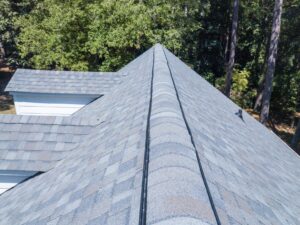
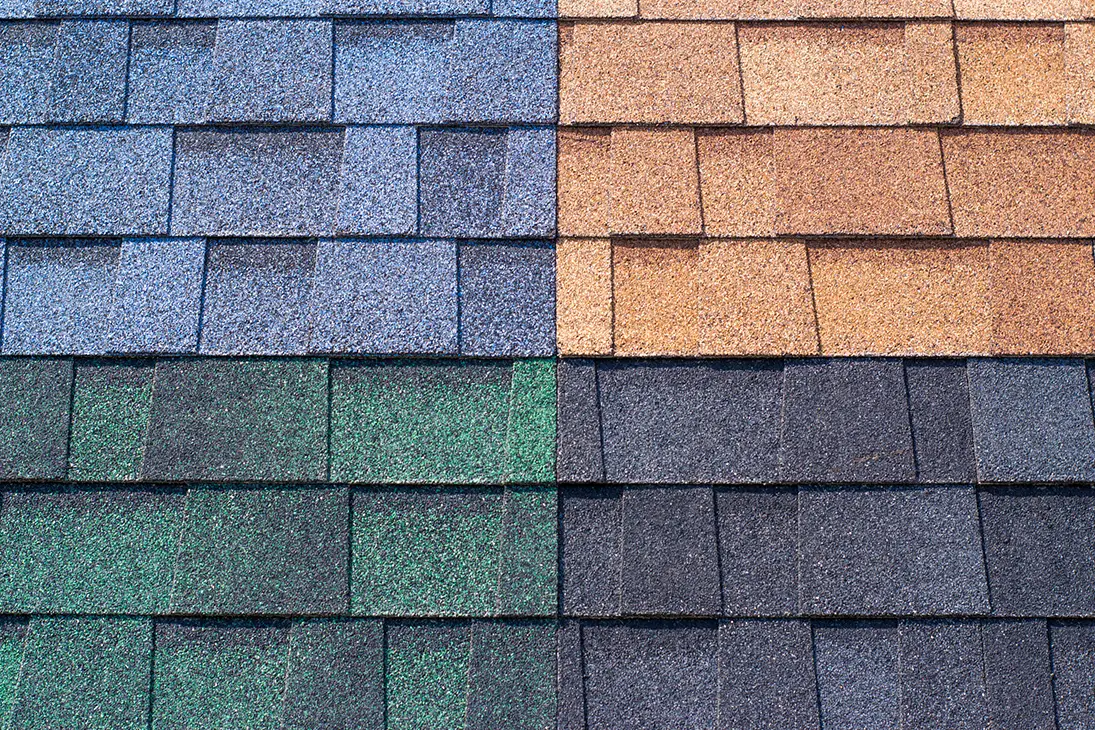
One important thing to know before you start looking: modern shingles aren’t a single flat color. They’re granule blends, a mix of differently colored ceramic-coated granules applied to each shingle to create depth and dimension. A shingle labeled “weathered wood” isn’t just brown; it contains browns, grays, tans, and sometimes hints of black or green.
This is why a shingle can look completely different in a swatch in your hand versus installed on a 2,000-square-foot roof 30 feet overhead. It’s also why you need to see samples in real lighting, not just on a screen.
Blacks and Charcoals
Bold, modern, and high-contrast. These colors work with nearly any siding and make strong architectural lines pop. They’re a go-to for modern farmhouses, contemporary homes, and urban designs. Popular examples include GAF Charcoal, Owens Corning Onyx Black, and CertainTeed Moire Black.
Grays
The most versatile family, and for good reason. Gray shingles range from pewter and light gray (airy, coastal-leaning) to slate gray (timeless, traditional) to deep charcoal gray (modern, sophisticated). If you can’t decide on anything else, a mid-tone gray is almost always a safe, attractive choice.
Browns and Weathered Wood Tones
Warm, traditional, and grounded. These blends mimic natural cedar or aged wood and work beautifully with brick, stone, and earth-toned siding. Weathered Wood is consistently one of the best-selling shingle colors in North America. Popular examples include GAF Weathered Wood and Barkwood, and Owens Corning Driftwood and Brownwood.
Tans, Beiges, and Greige Blends
The sweet spot of current design. Greige (gray-beige) blends offer the warmth of brown with the modernity of gray, and they coordinate with almost any exterior palette. These are among the most-requested shingles in new construction right now.
Greens
Forest green, hunter green, chateau green. These shine on homes surrounded by trees, brick exteriors, and traditional or craftsman architecture. Not a trend color (they’ve been around forever), but they need the right setting to look their best.
Blues and Blue-Grays
Coastal and contemporary. Blue roofs have shown the strongest regional growth in coastal markets. They pair best with white, cream, or light gray siding and read instantly as “seaside” or “modern.”
Reds, Terracottas, and Warm Earthy Statements
Best suited to Mediterranean, Spanish Colonial, and Victorian homes. Not for every house, but on the right architecture, a terracotta or deep red roof is stunning.
Purples and Designer-Series Hues
The boldest end of the spectrum. Owens Corning’s Midnight Plum (their 2023 Color of the Year) and Merlot demonstrate what’s possible when a manufacturer pushes granule blending. From a distance these read as dark sophisticated neutrals, not as purple, and they photograph beautifully.
Your Framework for Choosing Roof Shingle Colors
Rather than presenting a basic checklist, here are six filters to walk through in order. Each step narrows your options, so by the time you finish, you’re looking at a shortlist instead of a catalog.
Step 1: Identify Your Exterior’s Undertone
Every exterior color has an underlying temperature. Cool undertones contain hints of blue, green, or purple. Warm undertones contain hints of red, orange, or yellow. White, gray, beige, and brown can go either way depending on the specific shade. A “warm gray” tilts toward beige; a “cool gray” tilts toward blue.
Your shingle should live in the same temperature family as your siding, brick, and trim. A warm-toned beige house with a cool blue-gray roof will feel off, even if you can’t articulate why. Quick test: hold up a piece of white printer paper next to your siding. If the siding looks creamy or yellow against the paper, it’s warm. If it looks silvery or bluish, it’s cool.
Step 2: Factor in Climate
Remember, where you live matters.
- Hot Climates: In the Sun Belt and desert Southwest, lighter shingle colors reflect heat and reduce cooling costs. A light gray or beige roof can run 50°F cooler than a black one under direct sun.
- Cold Climates: In the Upper Midwest, Northeast, and Mountain West, darker shingles absorb heat and help melt snow and ice, which reduces ice dam risk.
- Mixed Climates: Across much of the country, you have flexibility, but lean toward mid-tones.
Now it’s worth mentioning that there’s actually such a thing as ‘cool roof’ shingles. These are dark-colored shingles manufactured with specially engineered reflective granules. They give you the look of standard dark shingles but reflect heat almost as well as light-colored ones. If you want that option, look for ENERGY STAR-certified products from GAF, Owens Corning, and CertainTeed
Step 3: Match Your Architectural Style
Certain shingle colors sing on certain houses. Here’s a quick reference for the most common American home styles.
Colonial and Traditional
Charcoal, weathered wood, or dark brown. These support the symmetry and classic proportions of traditional architecture.
Craftsman and Rustic
Earthy browns, hunter green, and barkwood blends. Craftsman homes emphasize natural materials, and your roof should too.
Modern and Contemporary
Black, deep charcoal, and high-contrast grays. Clean lines want bold roof colors.
Farmhouse (Modern or Traditional)
Weathered wood, slate gray, or a crisp matte black. The modern farmhouse black roof is everywhere for a reason.
Victorian
Deep purples, hunter greens, and dark grays. Victorians are already visually busy; a rich, dark neutral roof anchors them.
Coastal and Cape Cod
Blues, blue-grays, and driftwood tones. The lighter the roof, the more coastal it reads.
Mediterranean and Spanish Colonial
Terracotta, warm browns, and tan blends. These homes almost demand warm earth tones.
Ranch
Mid-tone grays and weathered wood. Ranch homes are horizontal, and roofs that are too dark make them look squashed.
Step 4: Coordinate with Your Fixed Materials
You can repaint siding. You can’t repaint brick, stone, or most of your trim. Your roof color needs to work with whatever is permanent on your house.
| Fixed Material (Color of House) | Shingle Colors that Look Best |
| Red brick | Charcoal, black, dark brown, hunter green |
| Light or tan brick | Weathered wood, warm grays, driftwood blends |
| Stone or mixed masonry | Mid-tone grays, browns, blends that pick up a stone color |
| White siding | Almost anything; go dark for contrast or deep color for drama |
| Beige or tan siding | Earth tones, weathered wood, lighter browns |
| Gray siding | Darker grays, black, cool blue-grays |
| Blue siding | Gray, charcoal, weathered wood |
| Natural wood siding (cedar, etc.) | Brown, slate gray, hunter green |
| Green siding | Brown, charcoal, or matching green-gray |
Step 5: Consider Roof Size and Complexity
A detail nobody tells you: the bigger and more visible your roof, the more your color choice dominates the home. On a low-slope ranch, your shingles are barely visible from the street and you can get away with almost any color. On a steep two-story with multiple gables and peaks, your roof is a massive visual element.
On larger, complex roofs, pure black can overwhelm the house and make architectural details disappear. Lighter mid-tones or textured multi-tone blends let dormers, gables, and rooflines show. On simpler roofs (a single gable, a ranch profile, a low slope), you can carry bold, solid-looking colors because the roof isn’t fighting for attention.
Step 6: Check HOA Rules and Neighborhood Norms
Last filter. If you live in an HOA, get the approved shingle list before falling in love with a color. Many HOAs maintain strict palettes; some require specific manufacturers or product lines.
Even if you’re HOA-free, take a drive through your neighborhood. Note which shingle colors dominate and which ones stand out (for good reasons or bad). You’re not trying to match. You’re checking whether the color you’re considering will complement or clash with what’s next door.
Roof Shingle Color Trends for 2026
Here’s a quick trend check for those wondering what’s popular these days
- Earthy neutrals and greige blends continue to dominate. Warm browns, sandy taupes, and gray-beige hybrids lead sales nationwide.
- Multi-tone dimensional blends have largely replaced single-color flat shingles. Manufacturers are investing in granule technology that adds visible depth from the street.
- Regional trends vary. The South leans lighter (soft whites, pale grays, reflective beiges), the North leans darker (deep charcoals, midnight blacks), coastal markets are buying more blues and blue-grays than ever, and mountain and rural regions hold steady on earth tones.
- Designer-series statement colors such as Midnight Plum, Peppercorn, Sand Castle, and Aged Copper appeal to homeowners who want something distinctive without going bold-bold.
- Colors of the Year from recent seasons, including Williamsburg Gray (Owens Corning, 2024) and Merlot, reflect the industry’s shift toward sophisticated neutrals with depth.
Just remember that trends inform, they don’t dictate. A color you pick because it’s trending in 2026 may look dated by 2035, and you’re still stuck with it in 2045. Classic beats trendy when the decision lasts 25 years.
How to Evaluate Different Colors Before You Commit
The biggest mistake homeowners make is deciding from a brochure or a phone screen. Here’s the real evaluation process.
Start with a Visualizer
GAF’s Virtual Remodeler and Owens Corning’s Design EyeQ both let you upload a photo of your home and “try on” shingle colors for your roof. These tools aren’t perfectly color-accurate, but they’re excellent for ruling out obvious mismatches and narrowing from ten options to three.
Order Physical Samples
Every major manufacturer will send full-size shingle samples (not swatches) on request. A swatch the size of a credit card is almost useless; a full shingle shows the granule blend as it actually reads.
View Samples at Your Home, in Every Lighting Condition
Take them outside. Look at them at 8 a.m., at noon, at 6 p.m., on a cloudy day. Shingles change dramatically with light angle and weather. The charcoal that looked perfect at 2 p.m. may look navy at sunset.
Look at Installed Roofs of the Same Product
Ask your roofing contractor for addresses of nearby homes where they’ve installed the shingle you’re considering. Drive by. A shingle in your hand and a shingle on a 2,000-square-foot roof are different visual experiences.
Pick Up a Paint Color Deck
Hardware and paint stores sell paint fan decks for $5 to $30. Use it to isolate specific granule colors in your sample. This will train your eye to see undertones you’d otherwise miss.
Common Mistakes to Avoid When Picking a Color
Nearly every article in this space covers colors and factors. But almost none of them warn you about these common mistakes.
Choosing from a Screen
Monitors and phones misrepresent color badly. Physical samples are non-negotiable.
Matching Your Roof Exactly to Your Siding
Same-color siding and roof eliminates all contrast and flattens the house. You want harmony, not a monochrome.
Forgetting the Roof Will Age
Shingles weather. A crisp black fades toward dark gray after 10 years; browns soften; reds dull. Choose with the aged appearance in mind, not just day-one.
Picking a Trendy Color You’ll Regret
See the trend warning above. If a color is hot right now specifically because it’s hot right now, that’s exactly the kind of choice that ages poorly on a 25-year decision.
Ignoring Trim, Gutters, and Other Fixed Elements
Your roof has to work with more than your siding. White gutters on a dark brown roof look great; bronze gutters on the same roof don’t.
Not Accounting for How Visible the Roof Actually Is
Walk across the street. Look at your house from where a visitor would first see it. Is the roof the dominant element or barely visible? Adjust color boldness accordingly.
Skipping the HOA Check
Fall in love with an approved color, not a rejected one.
Assuming All “Weathered Wood” Shingles Look the Same
GAF’s Weathered Wood and Owens Corning’s Driftwood are both warm brown-gray blends, but they’re measurably different. Compare before you assume.
What Homeowners Should Know About Shingle Colors and Resale Value
Industry data consistently shows that homes with neutral, well-maintained roofs tend to sell faster than homes with bold or unconventional ones.
- Neutral Is Safe: Grays, weathered wood, charcoal, and soft browns appeal to the broadest buyer pool.
- Bold Is Fine If It’s Sophisticated: Deep plum, hunter green, and rich navy read as design choices, not mistakes.
- Trendy-Bold Hurts: Bright, loud colors shrink your buyer pool significantly.
- Match the Neighborhood: A terracotta roof that would look stunning in Arizona can read as odd in upstate New York.
If you plan to sell in five years or less, prioritize broad appeal. If this is your forever home, pick what you love.
Ready to Choose Your New Roof Color?
Let’s wrap this up by reviewing the framework for choosing the color of your new roof:
- Identify your undertone, warm or cool.
- Apply the climate, architecture, and fixed-material filters.
- Pick three or four shingle colors that survive all six steps.
- Order physical samples.
- Evaluate them on your actual house, in actual lighting.
That’s it. Follow these steps and you’ll end up with a roof you love, not just for the first year, but for the next 25.
At Hulsey Roofing, we walk homeowners through this exact process every week. If you’d like a no-pressure consultation, including real shingle samples brought to your home and addresses of nearby installs you can drive by, reach out anytime. The best roof decision is the one you make with the right information in hand.