A roof ridge vent is a continuous exhaust vent installed along the roof's peak that lets hot, moist air escape from your attic. Working together with intake vents near the eaves, it keeps fresh air moving through your attic space so your roof stays cooler in summer, drier in winter, and lasts longer. Here's how a ridge vent works, why it matters for St. Louis homes, and how to tell when yours needs attention.
What is a Roof Ridge Vent?
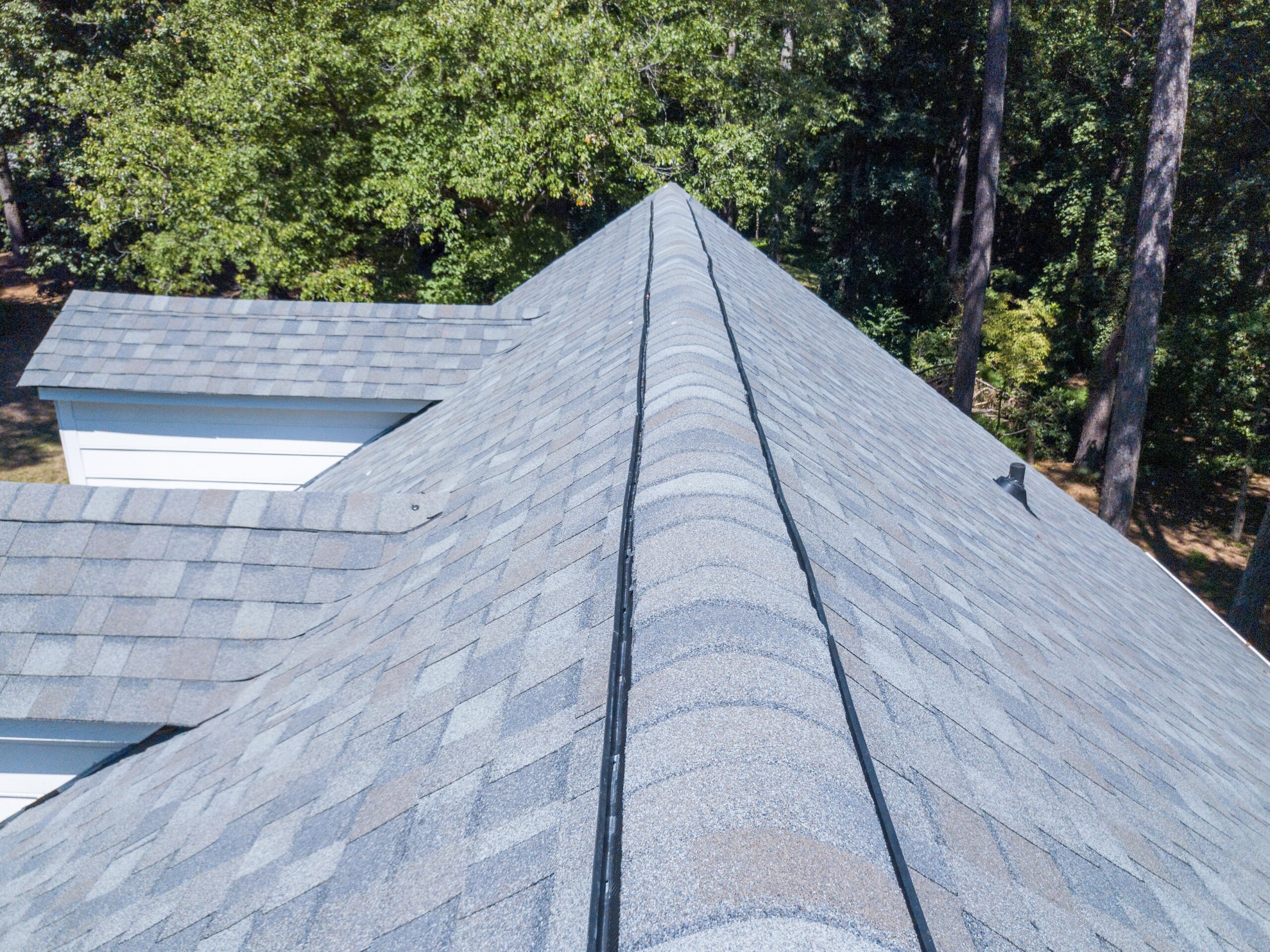
A roof ridge vent is a long, low-profile vent that runs along the peak of a pitched roof, right where the two slopes meet. To install one, a roofer cuts a narrow slot through the roof decking along the ridge and covers it with the vent. On most homes, the vent is then capped with the same shingles as the rest of the roof, so it's nearly invisible from the street. The ridge just looks a bit taller than it otherwise would.
That clean look is one reason ridge vents for roofs have become the go-to choice for so many homeowners, but the bigger advantage is coverage. Instead of venting through a few scattered openings, a ridge vent lets air out along the entire ridge, giving the hot air that collects at the top of the attic a continuous path to the outside. Each end of the vent is sealed with an end plug (sometimes called an end cap) to keep out rain, wind-driven snow, and critters.
A ridge vent is only half of a ventilation system; it handles the exhaust. For it to work, it needs a steady supply of fresh air coming in lower on the roof, usually through soffit vents tucked under the eaves. Without intake, the air in your attic has nothing to replace it, and the ridge vent can't do its job.
How Does A Roof Ridge Vent Work?
Roof ridge ventilation doesn't rely on motors, switches, or electricity. It works by putting a few simple laws of physics to use, 24 hours a day:
Heat builds up in the attic.
The sun beats down on your shingles, and warmth from the living space below drifts upward. On a summer afternoon, an unventilated attic can get far hotter than the air outside.
Hot air rises to the roof's peak.
Warm air is lighter than cool air, so it naturally collects at the highest point in the attic, right under the ridge.
The ridge vent lets it out.
That warm, moist air escapes through the openings along the ridge.
Cooler air is pulled in at the eaves.
As air leaves at the top, fresh outdoor air gets drawn in through the soffit vents to take its place.
The cycle repeats.
The incoming air sweeps along the underside of the roof deck, picking up heat and moisture on its way to the ridge.
This natural upward flow is called the stack effect, the same principle that makes smoke rise up a chimney. The greater the difference between the warm air at the top and the cooler air at the bottom, the stronger the flow.
Wind gives the system an extra boost. As a breeze passes over the roof, it creates an area of lower pressure right above the ridge, which helps pull even more air out of the attic. Many ridge vents include a baffle along each side that directs wind up and over the vent to strengthen this pulling action and help keep rain from blowing in.
Why Your Attic Needs to Breathe (and What Happens When It Can't)
A balanced system of intake and exhaust creates a continuous flow of air that reduces heat and moisture buildup year-round and can extend the life of your roofing materials. In the St. Louis area, where summers are hot and humid and winters bring freezing temperatures, your attic ventilation is working hard in every season. When it falls short, a few problems tend to show up:
Heat Buildup That Bakes Your Shingles
When hot air has no place to go, it stays trapped against the underside of the roof. That heat can speed up the aging of asphalt shingles from below, and it radiates down into your upstairs rooms. Your air conditioner then has to work harder to keep up, which means you're spending more money on cooling. Good attic ventilation is a simple, passive way to support your home's energy efficiency.
Moisture, Mold, and Wood Rot
Everyday activities like showering, cooking, and running the dryer send water vapor into the air, and some of it finds its way into the attic. In winter, that warm, moist air hits cold roof decking and condenses. Without a way out, the moisture can lead to frost on the underside of the roof, damp insulation, mold, mildew, and eventually rotting wood.
Ice Dams in Winter
Ice dams are a common winter issue for Missouri homeowners. They form when the roof deck is warmer than freezing while the outside air is colder. Snow melts on the warm part of the roof, runs down to the colder eaves, and refreezes into a ridge of ice. Water then backs up behind that ice and can seep under the shingles, causing structural damage and mold. Good airflow from the soffits out through the roof vents helps keep attic air cold enough to prevent or minimize that freeze-and-thaw cycle.
Shingles That Wear Out Early
Over time, trapped heat and moisture can cause shingles to curl, blister, or lose granules sooner than they should. Ventilation isn't the only factor in how long a roof lasts, but it plays a real role. Some shingle warranties also spell out ventilation requirements, so it's worth asking about yours. If you're already noticing wear, look for these signs you need a new roof.
Ridge Vents vs. Box Vents, Turbines, and Other Roof Vent Options
Ridge vents come in a small variety of styles. The right one for your home depends on your roof type, pitch, and the look you want.
- Shingle-over ridge vents are the most common style on today's asphalt shingle roofing. They sit under ridge cap shingles and blend right in.
- Baffled (external baffle) ridge vents have a raised lip along each edge that deflects wind over the top of the vent, helping to pull air out and keep rain and snow from blowing in.
- Aluminum or metal ridge vents are an older, exposed style you'll often find on older homes. They're durable but more visible, and some can dent or corrode over time.
Ridge vents aren't the only exhaust solution out there. Here's how they compare to other common options:
| Vent Type | How it Works | Pros | Cons |
|---|---|---|---|
| Ridge Vent | Continuous exhaust along the roof's peaks | Vents the entire underside of the roof deck evenly; no moving parts or electricity; nearly invisible | Needs enough ridge length and balanced intake; not an option for flat roofs |
| Box Vent (static vent) | Individual square vents installed near the ridge | Inexpensive; works on roofs with short ridges or complex hips | Only vents the area around each unit, so several are needed; more visible |
| Turbine Vent | Wind spins vanes that pull air out of the attic | Moves a lot of air on breezy days | Moving parts can wear out or squeak; performance drops on still days |
| Gable Vent | Louvered openings in the gable end walls | Simple; no cuts in the roof surface | Airflow depends on wind direction and often misses parts of the attic |
| Power Fan | Electric or solar fan pushes air out | Active airflow on the hottest days | Uses power (unless solar); mechanical parts can fail; can draw conditioned air from the home if the ceiling isn't well sealed |
When you decide what vent type you want for your roof, always stick with one type of exhaust vent per attic. Combining different exhaust vent types above a shared attic can short-circuit the system. Because air always follows the path of least resistance, a ridge vent paired with a power fan or box vents may pull air through the other vent instead of from the soffits. That leaves parts of the attic unventilated and can even let weather inside.
Ridge vents are also designed for pitched roofs with a true ridge. Low-slope and flat roofing systems have no peak for hot air to collect in, so they rely on different ventilation approaches that a roofer will match to your building.
Why a Ridge Vent Can't Do the Job Alone
Adding a ridge vent to a roof with no intake is a bit like trying to drink through a straw with the bottom pinched shut. The best attic ventilation system combines balanced intake and exhaust with attic insulation that doesn't block the airflow. That second part matters more than many homeowners guess. Blown-in or batt insulation often gets packed into the eaves, covering the soffit vents from the inside. Roofers and insulation pros typically install baffles (also called rafter vents) to hold a clear air channel open between the insulation and the roof deck.
How Much Ventilation Does an Attic Need?
Attic ventilation is measured in net free area (NFA), which is the actual open space air can flow through once screens and louvers are accounted for. It's always smaller than the vent's overall size.
The International Residential Code (Section R806.2) sets the baseline at 1 square foot of net free area for every 150 square feet of attic floor, often called the 1:150 rule. The code allows that to drop to 1:300 when certain conditions are met, such as having roughly 40 to 50% of the ventilation located high on the roof (within 3 feet of the ridge) and the rest down low at the eaves. For a 1,500-square-foot attic, that's about 10 square feet of ventilation under the 1:150 rule, or about 5 square feet under 1:300, split between intake and exhaust.
Those ratios are a starting point, not a do-it-yourself formula. The right amount of ventilation depends on climate, roof slope, roofing materials, insulation, and other details of your home's design. Local code requirements and a professional assessment are the only reliable ways to find the right fit. Installing a ridge vent also means cutting through the roof deck at the peak, which is best left to a trained crew with the right safety equipment.
If you're planning a roof replacement, that's the ideal time to add or upgrade a ridge vent. With the old shingles off, your roofer can open up the ridge, check your intake, and build a balanced system from the ground up. Hulsey's residential roofing services include roof ventilation installation as part of a complete, properly designed roof.
Is Your Ridge Vent Failing? Watch for These Signs
Ridge vents are low-maintenance, but they aren't indestructible. Keep an eye out for these warning signs that your attic ridge vent or the ventilation system around it isn't working the way it should:
- An extremely hot attic: It feels like an oven on summer afternoons, and your upstairs rooms are hard to keep cool.
- Ice dams or large icicles: Thick ice builds up along the eaves under snowfall.
- Frost or mold in the attic: You spot frost on nail tips or the underside of the roof deck in winter, dark stains on the wood, or a musty smell.
- Curling or worn shingles: Shingles are curling, blistering, or shedding granules earlier than expected.
- Rising energy bills: Your heating and cooling costs are creeping up without an obvious reason.
- Leaks or water stains: Stains appear on ceilings or attic wood near the ridge, especially after wind-driven rain.
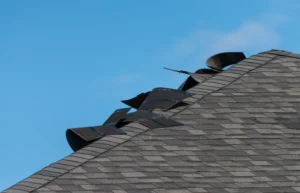
- Visible damage: The vent or its cap shingles look cracked, lifted, warped, or missing.
- Pests getting in: Birds, bats, wasps, or squirrels are finding their way inside, often through a damaged vent or a missing end plug.
The good news is that most of these issues can be spotted and diagnosed during a routine roof inspection. A trained inspector can check the vent from the roof and the ventilation path from inside the attic, then tell you exactly what's going on.
Repair or Replace? What Your Ridge Vent Needs
Not every ridge vent problem means starting over. Here's how to think about your options.
When a Repair Makes Sense
Many ridge vent issues are fixable. Common roof repair scenarios include cap shingles lifted or torn off by high winds, loose or backed-out fasteners, failed sealant, a missing end plug, or a small section damaged by a falling branch. If the rest of the vent and the roof around it are in good shape, a targeted repair is usually the most cost-effective choice.
When Replacement is the Better Call
Replacement makes more sense when the vent itself is at the end of its life (brittle, warped, or corroded), when it was undersized or poorly installed in the first place, or when the shingles around it are showing widespread wear. If a roof replacement is already on your calendar, it's smart to replace the ridge vent at the same time rather than put a new vent on an aging roof, or old parts on a new one.
Keep in mind that storm damage to a ridge vent can quickly turn into an urgent problem. An open ridge lets rain pour straight into your attic. If a storm has damaged your roof's peak, Hulsey Roofing offers 24-hour emergency roof repair to get your home protected fast.
Keeping Your Ridge Vent in Shape (and When to Call a Pro)
A little attention goes a long way toward keeping your ventilation system working. A few simple habits help:
- Look from the ground. A couple of times a year, and after major storms, scan the ridge from your yard (binoculars help) for lifted, missing, or out-of-place sections.
- Keep debris off the ridge and out of the gutters. Leaves and debris can collect around vents and eaves. If anything needs clearing from the roof itself, leave it to a professional rather than climbing up.
- Keep soffit vents clear. Make sure insulation, paint, or storage in the attic isn't blocking your intake vents.
- Peek into the attic seasonally. With a flashlight, check for frost, damp spots, stains, or signs of pests.
Pair those quick checks with regular professional roof maintenance to catch small issues before they become expensive ones.
A ridge vent plus balanced intake equals a healthy attic. When hot air and moisture can move freely out of your home, your shingles last longer, your energy bills stay in check, and winter ice dams become far less likely. If you're not sure your current setup is doing its job, you don't have to guess.
Hulsey Roofing has been helping St. Louis homeowners since 1987, and our team can assess your attic ventilation and recommend the right solution for your home. Reach out today to schedule a free estimate.
Hulsey Roofing keeps your attic ventilated and your roof protected. Call (314) 846-7663.
Call (314) 846-7663 for a FREE Assessment